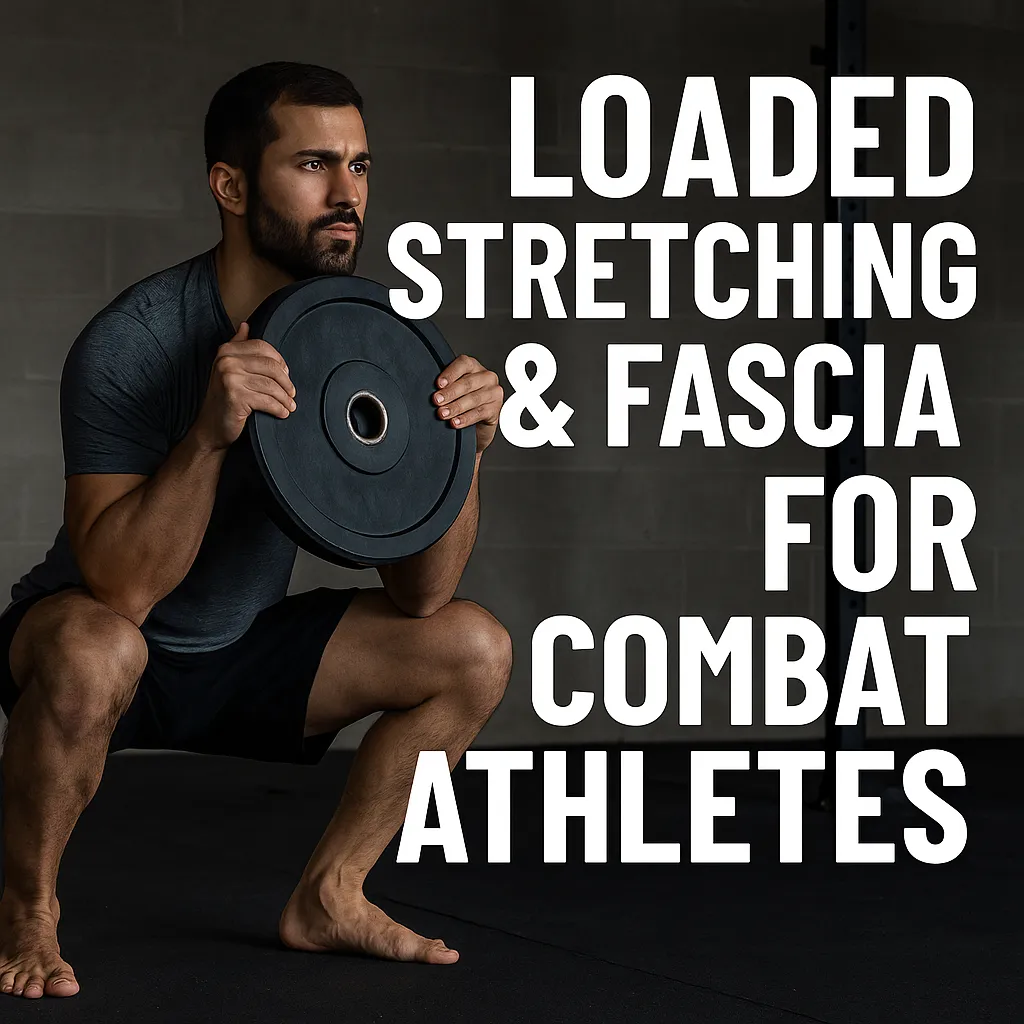
Fascia, Proprioception, and Performance: The Power of Loaded Stretching for Combat Athletes
Combat athletes need more than brute strength and conditioning—they need precision, control, and high-level body awareness. One often-overlooked component in this equation is the fascial system and its connection to proprioception. Fascia is not just inert connective tissue; it’s loaded with stretch receptors that feed critical movement feedback to the central nervous system (CNS). Loaded stretching, a strategic way of mobilizing the fascia, enhances range of motion and proprioception—two pillars of injury prevention and elite-level performance.
What is Fascia and Why It Matters
Fascia is a three-dimensional matrix of connective tissue that surrounds muscles, bones, and joints. It connects everything, allowing force transmission, movement synergy, and postural integrity. Fascia contains several mechanoreceptors, including:
Ruffini endings (sensitive to slow stretch and sustained pressure)
Pacinian corpuscles (responsive to rapid pressure changes and vibration)
Interstitial receptors (which communicate tension and compression to the CNS)
Golgi receptors (responsive to tension in tendons and ligaments)
These sensory receptors provide feedback that guides the brain’s interpretation of position, tension, and movement. For a fighter, that means real-time updates about limb position, muscle tone, and movement control—all critical during fast, reactive exchanges.
Loaded Stretching: How It Works
Unlike passive stretching, loaded stretching involves tension and muscular control while moving through a range. Examples include:
Loaded deep squats (holding weight while sitting deep into the hips and ankles)
Couch stretches with a kettlebell or plate (to anchor the pelvis)
Jefferson curls (slow spinal articulation under light load)
These movements stretch fascia and muscle simultaneously while maintaining active engagement. This dual demand stimulates proprioceptors, strengthens end ranges, and trains the CNS to become more accurate in controlling the body under tension.
Fascia, CNS Feedback, and Proprioception
Proprioception—the body’s ability to sense its position in space—is like a sixth sense for athletes. High proprioceptive capacity allows a combat athlete to:
React faster
Coordinate better
Transition smoothly between techniques
Maintain joint integrity under pressure
Loaded stretching activates skin stretch receptors in fascia, increasing sensory input to the CNS. Over time, this sharpens proprioception. Think of it as upgrading your body’s internal GPS—critical in the unpredictable, reactive environments of sparring and competition.
Performance Benefits for Fighters
Enhanced Range of Motion
Combat athletes need mobility without losing tension. Loaded stretching improves flexibility while reinforcing control at end ranges. This leads to smoother strikes, deeper takedowns, and improved guard retention.Joint Stability Under Load
Holding tension in stretched positions builds stability. Fighters can resist joint compromise in submissions or scrambling scenarios because tissues are stronger and more reactive in lengthened positions.Injury Resilience
Tight fascia and poor proprioceptive feedback are common culprits in non-contact injuries. Loaded stretching improves fascial glide and prepares the nervous system to stabilize during fast changes in direction or awkward positions.Movement Efficiency
When the CNS receives clean, accurate data from fascia, it can recruit muscles more efficiently. This leads to better energy use, smoother transitions, and less compensatory movement.
Practical Applications
Add loaded stretching 2–3 times per week as part of your mobility or warm-up routine. Start with:
Deep goblet squat holds (2–3 sets of 30–60 seconds)
Couch stretch with external load (plate or sandbag over the pelvis)
Jefferson curls (light weight, slow tempo, 8–10 reps)
Each should be done with control and breathing, emphasizing active engagement throughout the full range.
In combat sports, the edge often lies in the smallest details. Training fascia and proprioception through loaded stretching isn’t flashy, but it’s a game-changer for injury prevention, joint control, and elite-level performance. Don’t just train harder—train smarter by integrating your sensory systems into your performance blueprint.
References
Schleip R, et al. "Fascial plasticity – a new neurobiological explanation: Part 1." J Bodyw Mov Ther. 2003.
Wilke J, Krause F, Vogt L, et al. "What is evidence-based about myofascial chains: A systematic review." Arch Phys Med Rehabil. 2016.
Behm DG, et al. "Effect of proprioceptive neuromuscular facilitation stretching on jumping performance." J Strength Cond Res. 2001.
Stecco C, et al. "The role of fascia in movement and stability." J Bodyw Mov Ther. 2015.
